Showing posts with label Smartphone. Show all posts

Saturday, February 14, 2015

Motorola to open ‘experience centres’ in India

Motorola, the first company to take the online route for sales of its handsets in India, on Thursday said it is looking at setting up offline experience centres in the country that would double as service centres.
Motorola India General Manager Amit Boni said, “We are looking at setting up about 5-10 experience centres across various metros this year, starting with Bangalore.”
These centres are aimed at enabling customers to experience the touch and feel of the device before they make their buying decision, he added. Asked if the company will sell devices via the offline route, Mr. Boni replied in negative.
Motorola, which sells devices in India through e-commerce major Flipkart, currently sells three handsets in the country - Moto E, Moto G and Moto X in the market, beside a smartwatch, Moto 360.
The company also announced that it has sold over 3 million devices in the country.
“We have crossed the three million device sales milestone. The three handsets are priced differently, but the Moto E and Moto G make up a large chunk of the sales, almost 80-85 per cent,” Mr. Boni said.
Read More »

Why thieves no longer love smartphones

Smartphones, particularly iPhones, are no longer the favourites of discerning lifters, recent data shows. The reason: the “kill switch” is proving the killjoy for the thieves.

The number of thefts and robberies of smartphones, particularly iPhones, is on the fall in New York, London and San Francisco, according to fresh data.

Law enforcement officials, who have been at the forefront of demands to include a “kill switch” in all smartphones, hailed the news as proof that the technology is working as a deterrent, PCWorld reported.

“The huge drops in smartphone theft that have occurred since the kill switch has been on the market are evidence that our strategy is making people safer in our cities, and across the world,” New York State Attorney General Eric Schneiderman said in a statement.

The kill switch is a software lock that can be remotely activated when a phone is lost or stolen. It can wipe personal data from a phone and “brick it” so it can’t be reused or reprogrammed.

Law enforcement officials campaigned to make the technology standard in reaction to a growing numbers of thefts of robberies of smartphones on city streets across the U.S. and beyond. The assumption was that phones would be much less desirable targets if they could quickly be made useless.

Apple added a kill switch, called Activation Lock, to its iPhone in September 2013. Samsung followed in April 2014 with its Galaxy S5 and Google made it a standard feature of Android with the release of Lollipop.

In San Francisco, overall robberies and thefts dropped 22 per cent from 2013 to 2014, but those involving smartphones were down 27 per cent. Thefts and robberies of iPhones fell 40 per cent.

In New York, smartphone theft dropped 16 per cent overall with iPhone figures down 25 per cent. And London saw smartphone thefts from persons drop 40 per cent in a year.
Read More »

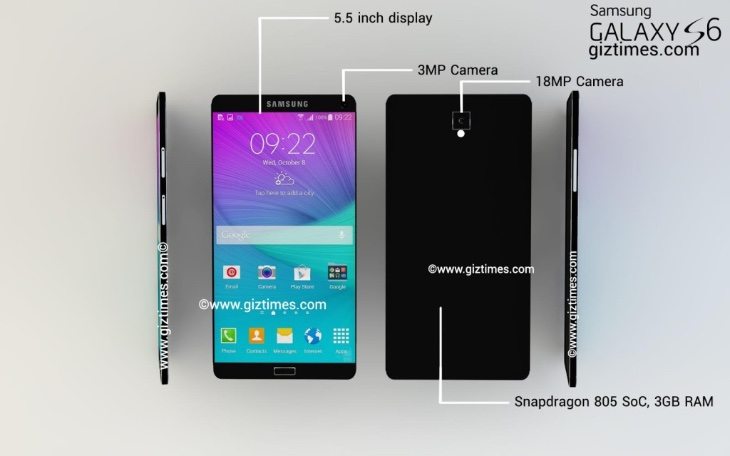
Samsung Galaxy S6 with curved screens on three sides, 20 MP Camera and Better battery withstanding

Samsung's new Galaxy S6 is expected to have screens covering the sides that will curve round to cover three of the four sides.

The new flagship phone is expected to be unveiled at Mobile World Congress in Barcelona. Samsung's event is scheduled for March 1.

Samsung uses a curved screen on its Galaxy Note Edge, where it bends around just one corner. That screen works like a "ticker", the company has said, with users able to have notifications displayed down the side.

The new phone will also allow users to add favourite contacts and other important shortcuts to the screen on the side, allowing users to quickly access them.

The company will release two versions of the phone, one of which will feature the curved screen, according to a Bloomberg report. Both will have metal bodies and 5.1 inch screens, as revealed in previous leaks.

Samsung's next flagship phone Galaxy S6 and its curved variant are expected to be unveiled next month on the sidelines of the Mobile World Congress, Barcelona. The rumour mill is busy churning out something new every other day and it gets difficult to keep track of all the leaks. 

The phones are also set to feature a 50% faster CPU and a 20 megapixel camera. Its battery might be able to last for four hours on just a 10 minute charge, and it will be able to be recharged using wireless technology, according to reports.

The three-sided screen could also be a part of the mysterious bulge seen on the silver line in the invites to the event, which it has been speculated could be a reference towards a curved screen or the return of the "chin" that used to jut out the bottom of many phones.
Read More »

Wednesday, August 6, 2014

Samsung delays Tizen phone launch


Samsung had planned to release the phone with Tizen OS named “Samsung Z” in Russia but the plan stands postponed for now.

Samsung Electronics will delay the release of its first smartphone running the new Tizen operating system (OS), reports said.
No timeline was given for a new launch.
The Tizen OS is an open source, Linux-based system.
The “Samsung Z” prototype was introduced at a developers’ conference in San Francisco this year.
Currently, the Samsung camera and smartwatch series use Tizen operating system.
Read More »

Monday, March 31, 2014

waterproof Moto G ‘Forte’ coming soon

Motorola Moto G, which is among the best selling smartphones in India, will soon get a rugged, waterproof variant. A tweet talking about the upcoming Moto G Forte comes from none other than the prolific tipster ev Leaks, known to reveal accurate information about yet-to-be-launched devices.

The Moto G retails at Rs 12,499 for the 8GB and Rs 13,999 for the 16GB. This makes it the best, value-for-money offering under Rs 15,000 and quite possibly under Rs 20,000 as well. Flipkart calls it the fastest selling device on its site.

As the device is already a great success across the world, looks like Motorola is now planning to churn out several variants of the device. According to the tweet, the Moto G Forte is already headed to Latin America. Though there is no word on India launch, we can expect the device to reach the Indian shores too. It is still unknown if the company plans to improve the features further with the new model, but it is speculated that the device may retain the same specs sheet.

It remains to be seen how much the waterproof and durable design for the Moto G will affect its price. The device has received rave reviews for its build, performance at a price that’s a bargain. But whether the Moto G Forte have a much higher price is as yet unknown, though it’s unlikely that Motorola will price it much higher, since it would tread into Moto X territory. In India, the Moto X was launched India, for Rs 23,999, so expect the Moto G Forte to be around the Rs 16,000 range, if it comes to India. 
Read More »

Quad-core iBall Andi 5T Cobalt 2 with 12MP camera launched for Rs 11,999

iBall has launched its latest smartphone dubbed Andi 5T Cobalt 2. The 5-inch quad-core smartphone comes at an MRP of Rs 12,499, but the company is selling the device at a best buy price of Rs 11,999.

It sports a 5-inch IPS display with 720p resolution, and an OGS (one glass solution) touch panel. Under the hood, the Cobalt 2 comes powered by a quad-core 1.3GHz Cortex A7 processor, coupled with 1GB of RAM. On the camera front, it gets a 12-megapixel auto-focus rear camera with flash and a 2-megapixel front-facing camera to take selfies.

The smartphone runs on Android 4.2 Jelly Bean, along with UI customisations from iBall. Moreover, the smartphone is ready to be upgraded to Android KitKat, says the company. The internal storage is unclear, but the device will come with microSD card support.

Commenting on the launch Director iBall, Sandeep Parasrampuria says, “Cobalt 2 is a complete package of powerful technology with extremely appealing design and features that every user will cherish and feel happy about. We are sure Cobalt2 will be as much liked as our first Cobalt. It also comes bundled with 4 beautiful interchangeable covers with different colors with stunning rose gold tinted rim.”
Read More »

Wednesday, March 26, 2014

Now available: LG L70 Dual for Rs 14,500, L90 Dual for Rs 17,499

undefined
LG had shown its new L Series III smartphones at the LG Tech Show 2014 in India earlier this month. From the new L Series III, the new L70 Dual and L90 Dual have now been listed online for Rs 14,500 and Rs 17,499 respectively.


LG L70 Dual and LG L90 Dual are listed on the Snapdeals website and the delivery day is estimated to fall in first to second week of April. Both these smartphones offer dual-SIM configuration and come pre-loaded with Android 4.4 KitKat operating system. Let us take a quick look at the LG L70 Dual and L90 Dual smartphones.


LG L70 Dual

As the name suggests, the L70 Dual can accommodate two SIM modules. It has a 4.5-inch LCD display with 480x800 pixel resolution and is powered by a dual-core 1.2 GHz Qualcomm Snapdragon 200 mobile chipset coupled with Adreno 302 GPU graphics. LG has packed 1 GB RAM and 4 GB on-board storage along with memory slot in the L70 Dual.


Indian version of the L70 will sport a 5 megapixel camera at the back for imaging and in the front will be VGA camera for video calls. The L70 Dual packs a 2100 mAh removable battery.


Check out the L70 in pictures here. The LG L70 Dual will compete closely with the Motorola Moto G which happens to be quite popular despite of being exclusive to Flipkart website.


LG L90 Dual

LG L90 offers a 4.7-inch IPS LCD display with 960x540 (qHD) pixel resolution and is powered by a quad-core 1.2 GHz Qualcomm Snapdragon mobile processor. The L90 offers 1 GB RAM and 8 GB on-board storage along with memory card slot expand the storage.

The 9.7 mm thick L90 supports 3G network (HSPA+">HSPA+ that offers up to 21 Mbps) for faster mobile internet. The handset has an 8 megapixel camera at the back and a 1.3 megapixel camera in the front for video calls. LG has packed a 2540 mAh removable battery in this phone.
Read More »

Friday, March 21, 2014

Gionee Elife E7 review: Amazing hardware let down by unpolished software

undefined
The Elife E6 was a huge hit for Gionee and marked the company’s official entry into the premium smartphones category in India. Coupled with a glitzy launch affair, India finally took notice of an otherwise unknown smartphone maker trying to make a name for itself. The launch of the Elife E7 was an even grander affair and rightfully so since this is Gionee’s answer to high-end droids from big name companies but with a very affordable price tag.


Gionee is talking up the camera capabilities of the E7, as it happens to be the second Android phone in India with a 16MP primary sensor (the first being the Samsung Galaxy S4 zoom).


Design and Build : The E7 follows a completely new design philosophy compared to the E6. The monolithic design consists of a unibody, polycarbonate shell that’s available in a variety of colours. We’re not terribly fond of the glossy finish as it’s a nightmare to keep clean. Thankfully, it doesn’t attract fingerprints as much as you’d expect.


The placement of the buttons isn’t too great either as the power sits right on the top, which is inconvenient to reach considering it’s a 5.5-inch display. The phone is incredibly slim and light though and it won’t weigh you down in your pocket.


We have capacitive buttons in the front along with an 8MP front-facing camera. There are two symmetrical grills at the bottom for the speaker and microphone. Around the back, is the brand new 16MP camera sensor from OmniVision. There isn’t a Xenon flash however, which is a sad considering a you’d expect the best flash technology in a phone designed for photography.


Overall, the E7 is a well-crafted handset and has premium written all over it. The design leaves a lot to be desired however as it doesn’t really stand out in any way. Also, at 5.5-inches, it can be quite cumbersome to use.


Features : The Elife E7 features a 5.5-inch, Full HD display. The IPS panel does a great job at delivering lively colours and sharp text. Viewing angles and sunlight legibility are also pretty good.


Like the E6, the E7 also features Gionee’s heavily customised version of Android 4.2.2, which, in a nutshell, is a complete nightmare to use. It’s hard to use it for more than a couple of days without risking losing your sanity. All apps are displayed on the home screen and the redesigned, oversized icons mean it’s hard to spot the app you’re looking for. There’s no option to have homescreen widgets here, which is really annoying. The experience is a bit smoother than it was on the E6, I’ll give it that much. But it’s terrible nonetheless.


The E7 also comes with some ‘Smart Gestures’ like tap-to-wake, smart answer, etc. These work well but we wouldn’t recommend turning on the tap-to-wake as this feature sporadically woke up the phone while still in the pocket. I would remove the phone from my pocket, only to find that I had accidentally sent gibberish text to a friend on Whatsapp. Adding a pattern lock helps but we didn’t face such an issue on the G2.


Gionee does bundle along a boat load of apps with the E7 like a bunch of games, productivity apps, and some of their own like GioneeXender, NQ Mobile Security, Traffic Assistant, Power Manager, Amigo Paper and CharmCam.

Media : The E7 features Gionee’s custom audio and video player. The music player has limited support for codecs as it does not support FLAC files. However, you might still want to use it as it supports DTS audio enhancements which make a huge impact on the audio. You can choose the built-in presets of tweak the setting yourself. Audio quality is good via headphones, but the loudspeaker isn’t great. At high volumes, there’s severe distortion.


Verdict and Price in India : The Gionee Elife E7 is available for Rs 26,300 online for the 16B model and about Rs 27,900 for the 32GB model. With such a minor price gap, it makes sense to pick the 32GB version considering you can’t expand the storage. What’s more, the 32GB version also comes with 3GB of RAM instead of 2GB. As far as camera-centric phones are concerned, the E7 is your best bet at this price point. You also have the Sony Xperia ZR, which is still a very good camera phone for the price.


Gionee ticks most of the right boxes with the E7. You get powerful hardware and a very capable camera. The 16MP shooter is nowhere as good as Sony’s Z1 but is still better than most 13MP shooters out there. However, there’s still a lot of work to be done when it comes to the firmware. It just feels unpolished and way too complicated for the average user. If Gionee can sort this out by sticking to stock Android as much as possible, then the E7 gets our recommendation.
Read More »

Thursday, March 20, 2014

Samsung Galaxy S5 vs. HTC One (2013)

The 2014 edition of the HTC One has to be one of the worst-kept secrets in the history of smartphones. But before HTC pulls back the curtain on its well-leaked new flagship next week, maybe you're wondering how last year's One stacks up to the Galaxy S5? Read on, as Gizmag compares the two phones' features and specs.


The Galaxy S5 is the bigger phone, but not by too big a margin. It's about four percent longer and seven percent wider than the 2013 HTC One. The One is bigger in one aspect, though, as it's 15 percent thicker than the GS5.


Both phones have sharp 1080p displays. And though some pre-announcement rumors had the GS5 launching with an insane 2K display, I don't think the 432 PPI screen that it actually has is any cause for concern.


The 2013 One gives you 85 percent as much screen real estate as the GS5. Both phones have navigation buttons below their screens, so none of that real estate gets used up by on-screen keys.


With the GS5, Samsung stuck with the same 2 GB of RAM from the Galaxy S4. That's also what you'll find in the OG One.

No surprise that Samsung's big 2014 flagship has a faster processor than HTC's 2013 flagship. Leaks are pointing to the 2014 One also packing a Snapdragon 801.


Just like with other recent Samsung phones, non-LTE regions will get a version of the GS5 with an octa-core Exynos processor inside.


On paper, the 2013 One's camera looks terrible. In experience, though, its UltraPixel camera is actually pretty damn good – and one of the best arguments yet that megapixels are overrated when it comes to camera quality.


We're probably going to see this spec pop up in a lot of 2014 flagships. The GS5, like the Galaxy Note 3 and LG G Pro 2 before it, can record 4K video.


Okay, so maybe it isn't fair to use an HTC marketing term as a "feature" in this comparison. Of course the GS5 won't have it. But the three-second video clips that the One's shooter takes with every tap of the shutter make for some cool gallery highlight reels.


Slow-mo is another camera feature we've been seeing a lot of lately, but last year's One was actually one of the first prominent phones with the functionality built-in.


The GS5 holds more juice, but we still don't know much about its actual uptimes. Stay tuned on that front.


Not every carrier has pushed the KitKat update for the One just yet, but HTC has a lot of those bases covered already. The GS5 launches with Google's latest. Of course both phones are wrapped in thick layers of custom UI: TouchWiz on the GS5 and Sense on the One.
Read More »

First Cut: Karbonn Titanium Octane Plus

Karbonn yesterday launched three smartphones - the Titanium Hexa, Titanium Octane, and the Titanium Octane Plus. We have already posted our first hand impression of Titanium Hexa and Titanium Octane. During the launch event we did also spend some time with the Titanium Octane Plus which is an upgraded version of the Karbonn Titanium Octane. Here is our first cut of the Titanium Octane Plus.


Design : The Karbonn Titanium Octane is a much different product than the Titanium Hexa and the Titanium Octane when it comes to the design. To start with, it comes in black colour and not red as the Titanium Octane. Like the Octane, it too has a removable back panel. As compared to Titanium Octane, it is a bit taller (147.3 mm vs 145.7 mm) and even wider (72.6 mm vs 71.2 mm). Also, it is quite slim with a thickness of just 7.6 mm. It comes with broader side panels and not curvy ones as is found in the Titanium Octane.


Display : In the Karbonn Titanium Octane Plus, there is a 5 inch touchscreen. It comes with full HD resolution, unlike HD resolution of Karbonn Titanium Octane. Also note that this is an IPS panel and it has good viewing angles as well. There are three off-screen buttons below the display as well.


Camera and Storage : The Karbonn Titanium Octane Plus comes with a 16 megapixel camera at the back with auto focus feature. There is an LED light besides it as well but we have not tested the quality of the flash light during photography. We though managed to capture snaps via the rear camera in default setting which looked good in the first place but we are yet to test its capability in different lighting conditions.


Performance : The Karbonn Titanium Octane Plus comes armed with the 1.7 GHz clock speed based Mediatek MT6592 octa core processor. As I said earlier, it has 2 GB RAM. Also, it is based on the latest Android 4.4 KitKat operating system. Though Karbonn has not mentioned the GPU of this handset, we expect it to have the Mali 450 GPU and anyway with 2 GB RAM and the octa core processor, it should give a flawless performance but again we would like to reserve our comment till an in-depth review.


Connectivity and Sensors : The Karbonn Titanium Octane Plus too has dual SIM slot like the Titanium Hexa and Octane. Also, this HSPA+">HSPA+ enabled handset has WiFi (b/g/n), Bluetooth 4.0, and micro USB port.


Conclusion : The Karbonn Titanium Octane Plus is priced at Rs 17,990 and is set to hit the retail market next month. Its chief opponenets, Intex Aqua Octa and Micromax Canvas Knight, are now available for around Rs 19,500. Not only price, but feature wise too the Titanium Octane Plus has a bit of advantage as it has the latest Android KitKat operating system unlike the Android 4.2 Jelly Bean version in the other two.
Read More »

Saturday, March 15, 2014

Motorola Moto X with 10 megapixel rear camera to be launched in India soon

undefined
Motorola's keenly anticipated smartphone Moto X is coming to India soon.


"The Moto X is coming soon stay tuned for exclusive launch day offers," online shopping site Flipkart has recently tweeted.


"Stay tuned to our Twitter page, we'll be announcing the details in a couple of days," it said.


Flipkart tweet says that the phone will be available in 5 colour variants and two wood. The wood backs will come with teak and walnut finish. "Walnut with black front and silver accents. Teak with white front and silver accents," Flipkart tweeted.


The MotoX will come with KitKat out of the box. The Android-powered phone is the first Motorola smartphone created in collaboration with Google .


Moto X smartphones are powered by Google's Android software and features include sophisticated voice controls and anticipating what users might want from the Internet at any given moment.


Motorola also streamlined the ease with which smartphone pictures can be taken.


The phone has 4.70 inch display, 1.7 GHz processor, 2 megapixel front camera with 10 megapixel rear camera, 2 GB RAM and 16 GB storage.
Read More »

Microsoft plans Windows Phone for Indian device makers without license fee

undefined
Last month, reports suggested that Microsoft was looking to slash its license fee to get more manufacturers on board, especially local manufacturers in growth markets such as India. And now it looks like the company is going to do one better.


A report in the Times of India quotes sources from Indian phone companies saying Microsoft has agreed to give them the OS without any licence fee. This after companies such as Lava, Karbonn and Micromax have been known to be in discussions with Microsoft to launch low-cost devices. Last month, Lava and Karbonn announced plans to produce Windows Phone devices. Xolo too is looking at Windows Phone and has already released plans for a Windows tablet. So obviously Microsoft has been making headway with companies here and the Indian connection with Satya Nadella now being the CEO must surely have helped in discussions, but as the report says, “the agreements were clinched only when Microsoft agreed to remove the licence fee.”

Microsoft has been known to charge between $20 and $35 per unit produced from companies which make Windows Phone devices. But in India even a low fee was not acceptable to manufacturers given Windows Phone’s low market share. Popular belief is that Android is free, but manufacturers still have to pay a fee to get access to Play Services and the Play Store. While Indian companies do not pay this fee directly (they are passed on to Google by the Chinese ODMs these companies use), they still have to absorb the cost. In the case of Android, they are more than happy to do this, given the demand and the market share of the OS, but that’s not the case with Windows Phone. Which is why Microsoft had to sweeten the deal.


“Free Windows Phone is part of a strategic partnership. For both Microsoft and us, it is an experiment. Windows Phone still doesn’t have lot of appeal in the market but now that it doesn’t have any licence fee, it becomes easier for us to experiment with it,” one executive with an Indian phone company was quoted as saying by the paper.


But the deal is essentially a two-pronged attack on the growth of Android. For Indian companies, having Windows Phone products gives them another front to chip away at the market share of biggies like Samsung, LG and Sony, who are fully focussed on Android. That’s one way to curb Android growth and it’s a win-win for both parties.


Secondly, having more device options in the market will lead to competitive pricing, which will also boost adoption rate. Indian companies are known for their aggressive pricing models and if there’s a repeat of anything like the Android smartphone explosion, you could soon have a huge number of Windows Phone devices in the market, at very attractive prices.


Things are not all bright though; there’s still the app hurdle, which will only go away gradually, but at least this is a bold move. And having more devices will convince more developers about the chances of the OS. With much of India still an untapped market for smartphones, Microsoft is finally making some shrewd business calls that could end up boosting its market share.
Read More »

Friday, March 14, 2014

Microsoft offers Windows phone OS free to Indian players


undefined
Desperate times call for desperate measures. With Windows Phone failing to make a significant dent in the market share of Google's Android and Apple's iOS in the last four years, Microsoft is waiving the licence fee and offering it to at least two Indian phone makers for free.


Last month at the Mobile World Congress in Barcelona, Microsoft announced that more phone makers, including two from India, Lava and Karbonn, will produce Windows Phone devices in the coming months. Both companies already make Android devices using Google's mobile OS which is free to use. Their Windows Phone devices are likely to hit the market in the next few months.


Multiple industry sources with knowledge of Microsoft's negotiations with Indian phone companies told TOI that it was in talks with local firms to produce affordable Windows Phone devices since last year. But the agreements were clinched only when Microsoft agreed to remove the licence fee it charges from phone makers for its OS.


This is unprecedented. Microsoft didn't even give the OS free to Nokia, which agreed to exclusively make Windows Phone in 2011. It reportedly charged Nokia between $20 to $30 for each Lumia device the Finnish company sold. Making the OS free also shows signs of growing frustration within the company at the lack of traction for Windows Phone in the market. Historically, licensing the software has always been bread and butter for Microsoft. "For our planned Windows Phone handsets, we are not paying Microsoft a licence fee. The company is obviously exploring new models for Windows Phone. It must have realized that the older model where it licenced the OS did not work out well, even with Nokia's support," a senior executive with an Indian phone company told TOI.


While Microsoft is likely to offer Windows Phone OS to other manufacturers, including the global companies, under similar terms, the agreements with the two Indian firms are specific to them.


A Microsoft spokesperson refused to comment on the specifics of the talks the company held with Indian phone makers. But, the spokesperson said, "We have extensive programmes to help our partners build great devices. Our licensing model allows us to partner with OEMs across the world."
Read More »

What's Wrong With Apple's iOS 7.1?


undefined
 Apple's iOS 7.1 update was released on Tuesday, delivering a noticeable boost in overall speed and responsiveness. But it soon turned out that the update also delivered a few problems — and a surprising number of visual tweaks.


The most striking visual change is the telephone interface. Although the circular number key pads remain, the large square "call" button has been replaced by a small circle displaying a phone icon.


Those phone call interface changes have been carried over to the answer/decline screens as well. Now when your receive an incoming call, the screen will display two simple red and green button icons, instead of the large "answer" and "decline" button blocks in the previous version.


This change seems more like a designer flourish rather than a practical move, as hitting those large call/answer/decline buttons on the iPhone's touchscreen while carrying bags or multitasking is certainly easier than having to now aim for the tiny circles.


In addition to boosting the accuracy of the iPhone 5S Touch ID system, iOS 7.1 now gives the feature its own set-up menu in the Settings section. Not much has changed here, but it's a welcome update and it seems a bit odd that Apple didn't give Touch ID its own menu section from the very beginning.


When iOS 7 first debuted, one of the biggest complaints revolved around the parallax effect in Wallpaper, a dynamic that caused some prone to motion sickness to avoid the feature altogether. With iOS 7.1, Apple has included a handy "perspective on/off" option when selecting a new Wallpaper image.


The feature also offers those who are fans of the feature a quicker way to test out how certain images will look with the effect before selecting that image as a new Wallpaper image.


The voice of Siri for U.S. users remains the same, but some international users will notice a warmer, more human-sounding digital assistant after upgrading to iOS 7.1. In particular, the British English and the Japanese voices of Siri offer noticeably warmer, less robotic sounding version of Siri. This "more human" touch has also been applied to the Australian English and Mandarin Chinese versions of Siri.


Another minor tweak to iOS comes in the operating system's Calendar and Weather apps. The new Calendar features a handy option that allows you to show special events and appointments right under the calendar view.
Read More »

Thursday, March 13, 2014

Idea Cellular and Gameloft ties up to offer quality games in India


Gameloft, a leading global publisher of digital and social games has partnered with Idea Cellular to offer quality gaming to Idea subscribers.


The tie up will enable over 130 million Idea subscribers to avail exciting games from the Gameloft Game Store and also through Idea’s mobile portal. Adding to the excitement, Idea subscribers will also get access to new content from Gameloft’s wide portfolio of games on a regular basis through the unique Gameloft Club subscription. As an inaugural offer, consumers will get 1 Bonus Game for download from Idea and Gameloft, in the first month of their subscription.


Sashi Shankar, Chief Marketing Officer, Idea Cellular said, “The mobile phone is increasingly becoming the most preferred infotainment device for users in India. Gaming is one of the fastest growing and a popular category of service used on the mobile platform. Idea is the first mobile operator in India to bring out the best in gaming programs for mobile users, through our tie up with Gameloft”.


“We are delighted to partner with Idea Cellular, to bring Gameloft’s best titles and most popular licenses to their subscribers”, said Sarabjeet Singh, Country Manager for Gameloft India. “This partnership will enable Idea customers to enjoy high quality games from Gameloft for their JAVA & Android devices without the hassles of Credit Card billing. Also, Idea will be the 1st operator in India to launch our popular Gameloft Club games subscription service, which provides great value to consumers", he added.


The Gameloft Game Store will be accessible for Idea customers through the mobile internet connection on their phones at wapshop.gameloft.com/idea. The service will be available for both prepaid and postpaid users and can be accessed on all GPRS enabled feature phones and 3G smartphones.


The Game Store has all the popular Gameloft franchises like Asphalt, Modern Combat, Real Football, Gangstar and N.O.V.A.: Near Orbit Vanguard Alliance, as well as games from Gameloft’s extensive list of Hollywood movie licenses. Also, the Store will provide Freemium games, Try & Buy as well as Full Paid Games for download to Idea customers.
Read More »

Gionee Elife E7 unboxing: An impressive Android smartphone for its price


We finally have Gionee’s flagship handset with us in the lab and what better way than to kick off than with an unboxing video. The Elife E7 is the successor to the popular Elife E6 whose claim to fame was the superior, industrial build and design. The E7 is quite different from the E6 in this respect but it still has all the makings of a serious contender in the mid-range segment, even though it’s the company’s flagship.


As you can see it’s quite a hulking box, with almost everything you expect from a smartphone and a little more. The phone runs Android 4.2 Jelly Bean and features Gionee’s custom Amigo 2.0 user interface layer to go with it. The phone’s 5.5-inch display is protected by Corning Gorilla Glass 3 and the phone itself is lightweight, weighing in at 128-grams. The body is quite glossy though, so you are very likely to leave fingerprints all over the back and sides. The performance of the phone should ideally be super smooth considering the Snapdragon 800 SoC, but we will be delivering our verdict on this in the in-depth review soon.


The cameras on the phone are supposed to be a high-point for Gionee, which says that the Elife E7’s secondary camera works far better than the one on the iPhone 5s. It also features features such as voice trigger and touch trigger, which we went over in our first look of the Gionee Elife E7 . The phone also houses three microphones with noise cancelling functions in order to improve the quality of voice calls. The whole show is powered by a 2500mAh battery.


In terms of specs, the E7 will go directly up against the Nexus 5. We’ve already done an in-depth hands-on video review during the launch of the E7 and also took a look at its younger sibling, the E7 mini, which is yet to appear in the market.
Read More »

Idea launches 3G-enabled smartphone Ultra II with 5.5-inch screen for Rs 12,500


undefined
India’s third largest private telecom operator Idea launched a 3G-enabled smartphone, ULTRA II with a 5.5-inch screen, at a price of Rs 12,500 focusing on driving data penetration in the country through sale of 3G devices.


Idea also launched an entry level 3G smartphone, Idea !d 1000, aimed at first time smartphone buyers and is priced at Rs 5,400, it said in a release. The handsets will be available in the market from next week.


“Lack of availability of affordable 3G smartphones with high-end features is the deterrent to mobile data growth in India. Idea has tried to bridge this gap by offering the best value for money 3G devices, in addition to our superior 3G products, services, and network coverage,” Idea Cellular CMO Sashi Shankar said.


The firm has witnessed a consistent growth in data uptake in its 3G markets where its branded 3G smartphones have been selling, for the past two years, he added.


“This has encouraged us to further expand our devices portfolio with the launch of our first 5.5-inch screen 3G smartphone, ULTRA II, and the entry-level !d 1000, which will help us target consumers at both ends of the spectrum,” he said.


The 5.5-inch Ultra II runs of Android Jelly Bean 4.2 and is powered by a 1.3 Ghz quad-core processor. The handset sports a 8 megapixel rear camera with HDR and a 2 MP front camera with LED flash, it said in a statement. It comes with 1GB RAM and 4 GB of internal memory (of which 2GB is available for user), and is expandable up to 32 GB via micro SD card.


It has a 2500 mAh powerful battery and comes with an ultimate power saver mode for 75 percent extra saving on battery time. The ULTRA II is available in white and electric graphite and is priced at Rs 12,500. The phone will be available at Idea’s major 3G markets — Andhra Pradesh, Kerala, Maharashtra & Goa, MP & Chhattisgarh, Haryana, UP West, and UP East.


Idea !d 1000, which features a 3.5-inch screen, is powered by a 1 GHz dual core processor and runs on Android Jelly Bean 4.2 OS. This dual-SIM handset also has a built-in social networking app. It carries a 2MP camera and an internal memory of 4GB, expandable to 32 GB. The smartphone will be available across Andhra Pradesh, Kerala, Maharashtra & Goa, MP & Chhattisgarh, Gujarat, UP West and UP East.


“With the launch of two new devices, Idea’s portfolio of 3G smartphones has gone to 15 and the company has already sold over 6.5 lakh devices,” Idea said.
Read More »

Sunday, March 9, 2014

Former Apple CEO John Sculley to launch smartphone brand in India; to sell handsets at Rs 12,000 and less


John Sculley, the man who fired Steve Jobs, is targeting India's growing smartphone market by selling handsets at Rs 12,000 and less, starting next month. InflexionPoint, an investment and acquisitions company promoted by Sculley, has hired Ajay Sharma, former head of smartphones at Micromax, to head the Indian operations. Sharma had earlier worked with HTC India.


Sculley, who was the CEO at Apple between 1983 and 1993, will fund the venture, Sharma told ET. The investments will flow into Dragon Technology, a distribution company owned by InflexionPoint in China. It will oversee production and supply chain of smart devices coming into India.


"Both of us were exploring opportunities and he (Sculley) thought that India is a good market for smartphones," Sharma said. "The name of the brand will be decided next week and the first of the Android smartphones will be launched by mid-April." An email sent to InflexionPoint seeking confirmation on Sculley's level of participation in the venture remained unanswered. Apple and Sculley's ventures may compete in different price bands and it will be interesting to see who wins a chunk of market share in the country.


Sculley's former employer, Cupertino, San Francisco-based Apple, which has handsets mostly in the higher price bands, is also trying to grow its share in India.


Smartphone sales grew more than two-and-half times to 44 million devices in 2013 from 16.2 million in 2012, according to research firm IDC India.


Apple has launched attractive installment and buyback schemes to boost its currently negligible share in the market dominated by Samsung and closely followed by home-bred handset makers Micromax and Karbonn.


Surging smartphone sales in India have been propelled by the introduction of low-end devices by international and local vendors.

Mobile company to stress on quality control

The introduction of low-end devices has narrowed the price gap between smartphones and feature phones, which offer basic Internet capabilities and are a notch above basic phones. Sculley and his team are targeting the affordable smartphones segment in India with devices that cost less than Rs 12,000.


Being based out of China, Dragon Technology will work with device makers in China on a daily basis ensuring quality control and production checks while working with suppliers to get the handsets into India. This will give the brand an advantage over others in India where most local smartphone makers only import completely built units for sale here without adding much value to the final product.


The smartphone brand won't be just another addition to the cluttered market as it will create a differentiation based on price, product, software and built-in services, Sharma said. "The smartphone share of the handset market in India will keep on rising. So everyone has scope to grow. We feel that it is the right time to launch a new brand as the market is set to explode," Sharma added.


Indians bought around 15 million smartphones in the October-December period, registering year-on-year growth of 181%, according to IDC. Samsung, Micromax and Karbonn cornered 64% of the sales in the three months through December. 

Read More »

Wello is a smartphone case from Azoi that tracks your health


Do you really have to go to the doctor every time you want to check vital parameters such as blood pressure or heart rate? Not if you have a portable health tracker, like a wristband that tracks fitness. While wearable devices have been the talk of the town for some time, innovation hasn’t stopped there. Enter Azoi Inc, a US-based startup that has a research centre in Ahmedabad, with a wearable health monitor for your smartphone — Wello.


Yes, it’s a smartphone case. One that lets you track six vital parameters — blood pressure, heart rate, temperature, ECG, blood oxygen and lung function — in 30 seconds. To measure five of these, all you need to do is place four fingers on Wello’s sensors just like holding the phone while taking a picture. Measurement of the sixth parameter, lung function, requires you to breathe in and out using an accessory that comes with Wello.


“There’s no consumer-facing device like Wello in the market. It can monitor health and let people check normal health levels without going through 200 lab tests. We are working on apps for iPhone and Android, which will let you track your medical history,” Ami Karnik, co-founder and head of strategy for Azoi Inc said at an event in Delhi on Thursday.


However, Karnik was quick to point out that Wello is not a clinical device and that Azoi Inc won’t ask doctors to use it. This device is for people who suffer from health problems such as hypertension, heart disease, low or high blood pressure. For these people, Wello can be a quick way to know whether they need to visit a doctor or whether a particular task is proving too taxing.


Azoi had a prototype case for demonstration during the event in Delhi. It was easy to use and showed data on all five parameters. Although this reporter’s vital parameters appeared to be normal, the data couldn’t be verified against lab equipment. Since the demo units were prototypes, Azoi refused a request for a review unit.


One thing that was clear from the prototype is that being available as a smartphone case is an advantage over wearable devices for Wello. Most people almost always carry their smartphones with them, so they are less likely to forget it. But it cannot passively monitor your health — you will have to keep reminding yourself to spare 30 seconds once every few days.


“Habitual use is a problem with standalone health monitors. That is why we chose to make Wello a smartphone case. It has a ‘brain’, which can be removed and put into any Wello case. There’s no need to worry if you change your phone. As of now, we have cases for iPhone 4S, 5 and 5S, and there will be cases for Android phones too,” Karnik said.


Wello is available for pre-order on azoi.com and costs Rs 12,350. Pre-orders are open till May 4 and should you order one, you can expect delivery by August.
Read More »

Karbonn Titanium X review: It's all about the screen


Of late Indian manufacturers have been trying to give high end specs at medium range prices. This is good for people who want the full Android experience. The Karbonn Titanum X is one such device.


Quick Tech Specs: 5 Inch Full HD IPS display | 1.5GHz quad-core Mediatek MT6589 processor | 1GB RAM | 16GB storage | 13MP rear camera, 5MP front camera | Wi-Fi 802.11 b/g/n | Bluetooth 3.0 | 2300mAh battery | Android 4.2 Jelly Bean


Design: Despite its very plasticky rear panel, the Titanium X has a decent built quality. A metallic body would have gone better with the overall image and name of the phone. At 143 grams, the device does not feel heavy though it looks a bit bloated. The volume rocker is on the left and the power buttons of the right and this takes some time to get used to. The micro-SIM slot is on top under a flimsy flap and being a unibody design there is no SD card slot. Below the screen is a three-key backlit panel that lights up as you touch it.


Screen: The best thing about this phone is undoubtedly its Full HD screen. This is among the cheapest phones that comes with one. You will realise the quality of the screen as soon as you switch on the device. The one glass technology adds to the value of this screen and prevents it from accumulating fingerprints. However, some of the preloaded games and apps failed to rise to the high standards set by the screen. If you are planning to use this for watching movies, the speaker might be a bit of a problem.


Performance: With 1.5GHz quad-core processor, the phone can easily multi-task and be sprightly when you are using it for gaming. The device came up with decent benchmark results that put is somewhere between the Google Nexus 4 and the Samsung Galaxy S3. The phone can manage graphic heavy games like the Robocop with ease and does not heat up like some of its contemporaries. The browsing is also fast, even with multiple tabs open.


Memory: While most so called top-end phones come with just 4GB of inbuilt memory, half of which is taken by the OS and app, the Titanium X gives about 10GB of free space. Though the company claims 16GB internal memory, we could find only about 14GB on the device of which about 10 is free. With no slots for a micro-SD card, a lot of buyers might look for other options.


Software: The Android 4.2 Jelly Bean operating system is what you would expect it to be. Karbonn had added some customized apps like Karbonn Zone and Karboon Live, but nothing that you would really want to use.


Camera: The camera is the worst part of this phone. The 13MP camera is anything but good and even the dual flash fails to redeem it in anyway. Pictures lack detail and clarity even in full daylight. Plus, there is a significant shutter lag.


Verdict: At a street price of Rs 16,500, this a decent Android phone with the sort of specs that you can flaunt. The screen is definitely what you are paying the money for. Don’t buy this if you like to take a second look at picture shot with your phone camera.
Read More »

Categories

3G 4G Aakash Acer Aircel Airtel Amazon Android OS Apple Laptop Apple News Applications Ashok Leyland Aston Martin Cars Asus Asus Laptop Audi Audi Car Bajaj Bikes Bing Bitcoin Black Berry BMW Bose Browser BSNL Camara Camera Canon Car Chevrolet Computer Cyber Crimes Data Card Datsun Dell Dot DRDO Dropbox Ducati Ericsson Facebook News Ferrari Fiat Cars Ford Cars Four Wheeler Fujifilm G-mail Gadget Game Gameloft Gatget Gionee GM Gmail Google News Google Tablet Google Watch Hangouts Harley-Davidson HCL HCL Laptop HCL Tablet Hero Bikes Honda Bikes Honda Car HP HP Laptop HP Smartphone HP Tablet HTC Mobile Huawei Hyundai Cars iBall IBM Idea Indian IT Information Information Infosys Inmobi Innovations Intel Internet Intex Mobiles Ipad iPhone Isuzu Motors IT Information Jaguar Cars Jeep Joint Venture Karbonn Mobile Karbonn Tab Kawasaki Bikes Lamborghini Car land rover Laptop Lava Lava Phone Lava Tablet Law Suit Lemon Mobile Lenovo Lenovo Laptop Lenovo Mobile Lenovo Tablet LG LG Mobile LG Televisions Linked in info Mahindra Mahindra Car Mahindra Tractor Malware Maruti Suzuki Maxx Mobile McAfee Mercedes Benz Micromax Mobile Micromax News Microsoft News Microsoft Websites Mitsubishi Mobile Mobile Networks Moschips Motorola Motorola Watch MTS New Technology Nexus NIIT Nikon Camera Nissan Nokia Mobile Oracle OS Other Tablet Panasonic Panasonic Mmobile Passport Phablet Philips Piaggio Play Station Quadricycle Range Rover Reliance Renault Renault Scala Robot Rolls Rolls Royce Salora Mobile Samsung Samsung Mobile Samsung News Samsung Tablet Sandisk Scooter Sistema Skoda Car Smart Watch Smartphone smoking Snapdeal Software Sony Sony Mobile spice SUV Suzuki T-Mobile Tablet Tata Docomo Tata Motors Toyota car TRAI TVS Twitter Two Wheeler Unilever Verizon Vespa Videocon Viper Vizio Vodafone Volkswagen Volvo Website Wechat Whatsapp Wickedleak Inc Wifi Wikipedia Windows 8 Windows News Windows Phone Wipro Xbox Xolo Mobile Xolo Tablet Xperia Yahoo Yahoo News Yamaha Bikes Zen Mobile ZTE Mobiles Zync Mobiles